
Singing and Humming to Your Baby: Why Your Voice is the Most Powerful Lullaby

by Barbara Fox
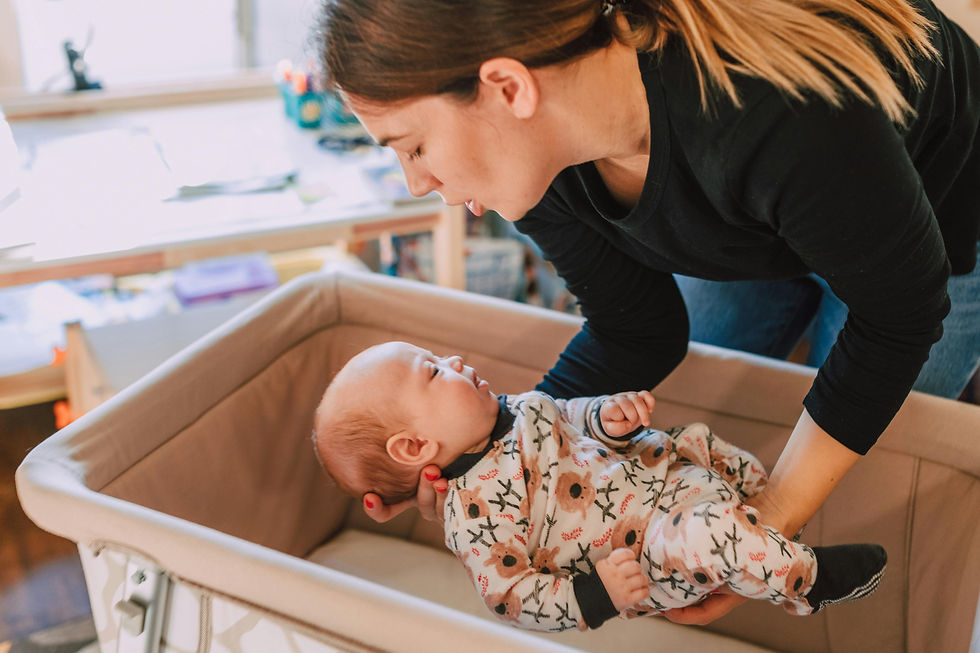
You don't need to be able to sing.
I want to say that right at the beginning, because I know it's the first thing that crosses the mind of many new parents when someone suggests singing to their baby. The self-conscious shuffle. The apologetic laugh. Oh, I can't sing.
But here's the thing: your baby has absolutely no idea whether you're in tune. And they couldn't care less.
What they care about is you. Your voice. The sound that was there from the very beginning — muffled and distant at first, then clearer, then the most familiar thing in the world. Long before they ever saw your face, they knew your voice.
And that changes everything.
What is singing and humming to your baby?
It is exactly what it sounds like — and yet somehow so much more.
Singing or humming to your baby means using your voice as a deliberate, conscious calming tool. A soft lullaby. A gentle hum. Even just a slow, rhythmic repetition of their name. The specific words or melody matter far less than the tone — slow, steady, warm and low.
It can be done anywhere, at any time, with no equipment whatsoever. In the middle of the night, in the back of a car, in a supermarket queue when your baby has decided that now is the perfect moment for a meltdown.
Your voice is always with you. And for your baby, it is home.
Why Singing and Humming is Such a Powerful Calming Technique for Babies?
Your baby has been listening to your voice since around the eighteenth week of pregnancy.
By the time they are born, your voice is the most familiar sound in their entire world — more familiar even than music, or traffic, or the sounds of the house they now live in. Research has shown that newborns can recognise their mother's voice from birth, and that hearing it triggers measurable changes in their brain activity and heart rate.
When you sing or hum to your baby, several things happen at once.
The sound of your voice reassures them that you are present and close. The slow, melodic rhythm activates the same calming response as rocking or heartbeat patting — steady, predictable, safe. And the act of singing or humming requires you to breathe slowly and steadily, which naturally reduces your own tension and stress. Your calm, once again, becomes their calm.
You don't need a lullaby
Many parents feel pressure to know the "right" songs — the classic lullabies, the nursery rhymes, the melodies everyone else seems to know.
But in my experience, the song matters far less than the singing.
In those early weeks, I would sometimes just hum whatever came into my head — fragments of songs I half-remembered, melodies I made up on the spot, sometimes nothing more than a low, steady hum with no particular tune at all. My daughter didn't care. She just wanted the sound of my voice, close and calm and constant.
Some of my favourite moments from that time are the ridiculous ones — humming the theme tune to a television programme at 3am, or quietly singing a completely inappropriate pop song in the softest, most lullaby-like voice I could manage. Whatever works, works.
Humming as an alternative
If singing feels too exposed — too loud, too self-conscious, too much for a tired brain to manage at midnight — humming is a wonderful alternative.
And I say this from very personal experience. My partner never sang to our daughter. Not once. Not because he didn't want to — but because singing simply wasn't his thing. He found it embarrassing, uncomfortable, and frankly a little ridiculous. So he hummed. Every single night, a low steady hum with no particular tune, her little head resting against his chest.
It worked perfectly. She settled just as well for him as she did for me. Because what she needed wasn't a perfect melody — it was him. His presence, his warmth, his voice in whatever form it came.
So if you're out there reading this and the idea of singing makes you want to sink through the floor — please don't worry. Hum. Just hum. It is absolutely enough.
A low, steady hum carries many of the same benefits as singing. It requires very little effort, can be sustained for a long time without strain, and creates a gentle vibration in your chest that your baby can feel as well as hear when held close against you.
Try combining it with skin-to-skin contact or the heartbeat patting technique — the combination of your warmth, your rhythm and your voice working together is remarkably powerful.
A personal note
There is a lullaby I sang to my daughter almost every night in her first year.
It wasn't a famous one — not a nursery rhyme or a classic. It was a small, simple song that my own mother made up when I was a baby. Just two or three verses, a gentle melody, nothing remarkable to anyone outside our family. She sang it to me, and her mother may well have sung something similar to her.
When my daughter was born, I found myself singing it almost without thinking — as if it had been waiting quietly inside me all along. And something extraordinary happened: she responded to it immediately. Not just as a calming technique, but as something she seemed to genuinely love. Even now, older and far less in need of lullabies, she still asks for it sometimes at bedtime.
A song that began with my mother, passed to me, and now belongs to my daughter too. That is not a small thing. That is a thread running through generations — and it started with a tired new mother, humming softly in the dark.
Whatever song you choose — borrowed, remembered, or made up entirely on the spot — it can become that for your family too.
Your voice is enough
Whatever you sing. However you sound. In tune or completely out of it.
Your voice is your baby's safe place. It always has been — long before they were born, and long after the sleepless nights are over.
Use it. Trust it. Don't be embarrassed by it.
It is, without question, the most powerful lullaby in the world.
Want to discover more calming techniques?
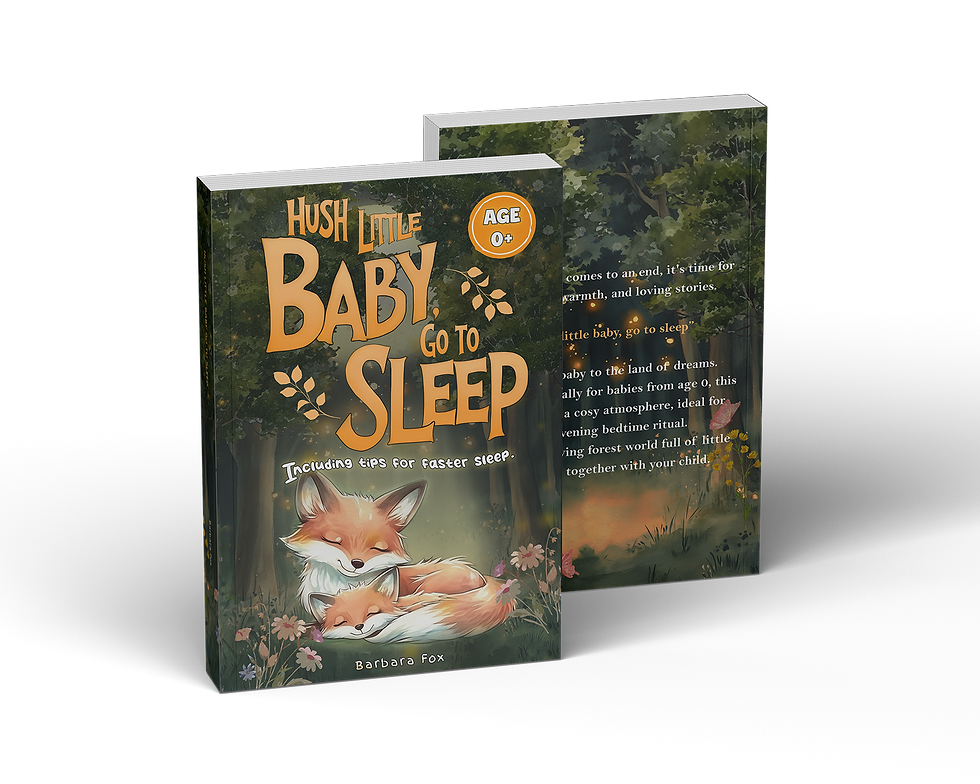
Singing and humming is just one of six tried-and-tested techniques included in my debut picture book, Hush Little Baby, Go to Sleep — alongside thirty gentle bedtime stories featuring the most adorable woodland animals you'll ever meet.
Because the best bedtime book should leave every reader — big and small — feeling a little more peaceful than before they opened it.
You can find Hush Little Baby, Go to Sleep on Amazon.
Comments