
Rocking and Swaying: Why Motion Calms Your Baby

by Barbara Fox
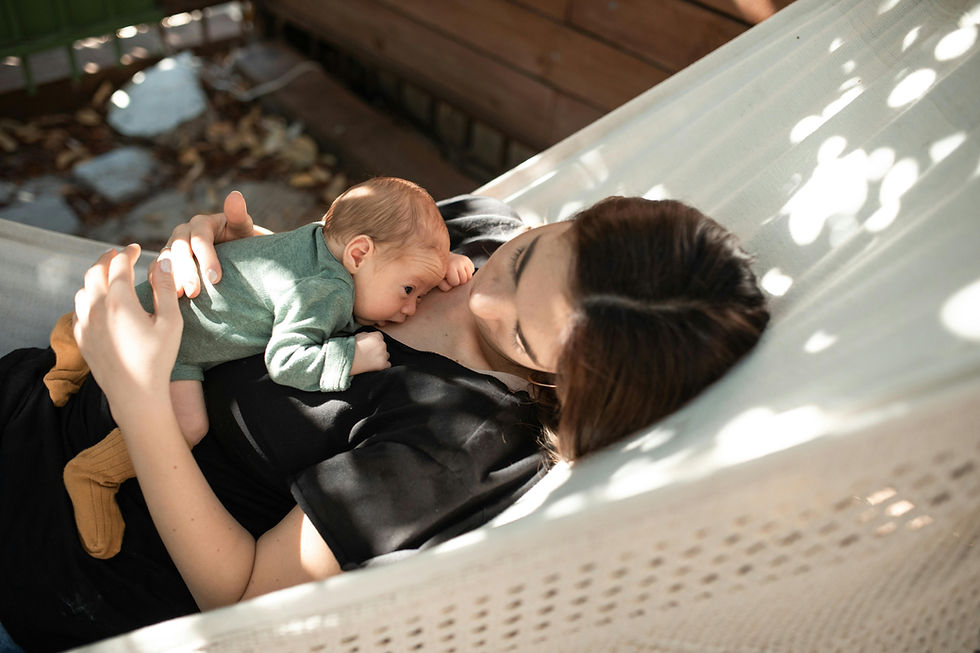
There is something almost universal about the image of a parent rocking their baby.
Across every culture, every country, every generation — humans have instinctively reached for motion when their baby cries. The gentle back-and-forth of a rocking chair. The slow sway of a parent standing in a darkened room. The rhythmic bounce of someone walking up and down the hallway for the hundredth time that night.
We do it because it works. And it works because of something that goes much deeper than habit.
What is rocking and swaying?
Rocking and swaying simply means moving your baby in a gentle, rhythmic motion — back and forth, side to side, or in a slow circular movement. It can be done while sitting, standing, walking, or using a rocking chair or baby swing.
And some babies have very strong opinions about which motion they prefer. I know of one little one who would only settle for a very specific up-and-down bouncing — nothing else would do. Every single night, up and down, up and down, until sleep finally came. Exhausting for the parents? Absolutely. Effective? Without question.
The movement doesn't need to be large or dramatic. In fact, smaller, steadier movements are often more effective than big energetic ones — particularly for very young babies who are easily overstimulated. But if your baby happens to be firmly in the up-and-down camp, you'll know about it very quickly — and you'll do whatever works.
Why Rocking and Swaying is Such a Powerful Calming Technique for calming Babies
The answer, once again, begins before birth.
In the womb, your baby was in almost constant motion — rocked gently by every step you took, every breath you drew, every movement you made throughout the day. Motion was their normal. Stillness, in many ways, was the exception.
When we rock and sway our babies, we are recreating that familiar world of gentle, constant movement. And their nervous system responds accordingly — heart rate slows, breathing steadies, muscles relax.
There is also a vestibular element at play. The vestibular system — located in the inner ear — processes movement and balance, and is closely linked to the regulation of arousal and alertness. Gentle rhythmic motion stimulates this system in a way that promotes calm and, eventually, sleep.
In short: your baby is not just comforted by being rocked. They are neurologically designed to be calmed by it.
How to rock and sway effectively
Hold your baby securely against your chest — supporting their head and neck fully. Begin with a gentle, steady rhythm. If your baby is very distressed, a slightly faster pace can help initially — then gradually slow as they begin to settle.
Some parents find a rocking chair invaluable, particularly in those early weeks when standing and swaying for extended periods becomes exhausting. Others prefer to stand and sway, finding that their own movement helps them stay calm too.
A baby swing or bouncer can also be useful — particularly during the day when you need your hands free. Look for one with a gentle, adjustable motion rather than a fast mechanical bounce.
A personal note
In our house, rocking and swaying was the technique we reached for first — almost automatically, without even thinking about it.
There is something deeply instinctive about it. The moment my daughter started to fuss, I would find myself swaying before I had even consciously decided to. My body just knew.
What I learned over time was to combine it with other techniques — a soft hum, or the heartbeat patting we talked about in our last post. On their own, each technique is helpful. Together, they were often unstoppable.
A few tips to help it work
Keep the movement steady and predictable — sudden changes in speed or direction can startle a baby who is just beginning to settle.
Try different rhythms — some babies prefer a gentle side-to-side sway, others respond better to a front-to-back rocking motion. Pay attention to what your particular little one seems to prefer.
Use it as part of a bedtime routine — if you always rock your baby gently before sleep, they will begin to associate that motion with rest, making it increasingly effective over time.
And don't forget to take care of yourself — holding and rocking a baby for extended periods can be physically tiring. Sit down when you can, use a rocking chair, or share the task with your partner.
You already know how to do this
I want to end with something that I find genuinely comforting.
You don't need to learn rocking and swaying. You don't need to practice it or perfect it. The moment your baby was placed in your arms, your body already knew what to do.
That instinct — that immediate, wordless impulse to hold and rock and soothe — is one of the most ancient and beautiful things about being a parent. Trust it.
Want to discover more calming techniques?
Rocking and swaying is just one of six tried-and-tested techniques included in my debut picture book, Hush Little Baby, Go to Sleep — alongside thirty gentle bedtime stories featuring the most adorable woodland animals you'll ever meet.
Because the best bedtime book should leave every reader — big and small — feeling a little more peaceful than before they opened it.
You can find Hush Little Baby, Go to Sleep on Amazon.



Comments